




















Can Natural Ingredients Help Ease Newborn Cold Symptoms?
 Skip to main content

Can Natural Ingredients Help Ease Newborn Cold Symptoms?

Soap vs Soap-free Cleanser: Which is Better for Babies?

Infant Solid Foods: A Beginner's Guide for Parents

Which Ingredients in Vapour Rub Help Ease Chest Congestion in a Newborn

The Science Behind pH-Balanced Baby Skincare Products
Bringing your little one home is a truly magical experience; a moment filled with wonder, love, and countless firsts. It’s also when parents become more observant than ever, noticing every tiny expression, movement, and sound their baby makes. As new parents, one of your top priorities is making sure of your baby’s health and well-being.
So, it’s natural to feel concerned if you notice a flat spot forming on your baby’s head. Known as Flat Head Syndrome or Positional Plagiocephaly, this condition can make the back or side of a baby’s head appear flattened. Plagiocephaly*, and it makes the back or side of a baby’s head look a bit flattened. The most important thing to know is that it’s very common, it’s not usually serious, and parents can almost always fix it with simple steps.
This guide aims to bring reassurance to new parents by shedding light on why flat spots can occur and how simple, nurturing habits can help prevent them. It also explores the gentle support that a well-designed mustard pillow can offer in caring for your newborn’s delicate head.
*Positional Plagiocephaly: also known as flat head syndrome, is a condition where a baby's head develops a flat spot, usually on one side of the back
When a baby enters the world, their head is soft and malleable, much like gentle clay. This softness helps during birth and supports healthy brain growth, but it also means that continuous pressure on one area can gradually cause the head to lose its natural shape.
Babies are born with soft, flexible skulls. This flexibility makes their heads more susceptible to flattening.
The most common causes include:
Lying in One Position Too Long: Since babies must sleep on their backs to be safest (to reduce SIDS risk), they spend a lot of time with their head resting against a flat surface. When a baby’s head rests in the same position too often, the constant pressure can cause a flat spot to develop.
Stiff Neck Muscles (Torticollis): Sometimes, a baby has tight neck muscles that make it difficult for them to turn their head equally to both sides. They favour one side, which means that side takes all the pressure, leading to a flat spot. If parents notice their baby always turning their head to one particular side or having difficulty looking in another direction, it’s a good idea to consult a doctor for guidance and early support.
Being Born Early: Premature babies often have even softer skulls and spend more time lying down without much movement in the hospital. This increases the risk of a flat head.
Too Much "Container Time": Spending too much time in gears like car seats, swings, or bouncers can also cause flat spots. These pieces of baby gear are convenient for short periods, but they keep the baby in a reclined position for too long, placing continuous pressure on the back of the head. Allowing the little one more floor time, such as supervised tummy time or play on a flat surface, helps relieve that pressure and encourages healthy head shape development.
Parents should regularly observe their baby’s head shape during routine moments, such as diaper changes or after bath time. Signs of Flat Head Syndrome can begin to appear as early as 6 to 8 weeks, making early attention and gentle adjustments important.
Flat Head Syndrome can appear as early as 6 to 8 weeks of age. Here are the signs to watch out for:
If you notice these signs, it’s best to consult your paediatrician for advice and further evaluation.
In most cases, Flat Head Syndrome improves as your baby grows, becomes more mobile, and spends less time lying down. Here are some effective ways to address it:
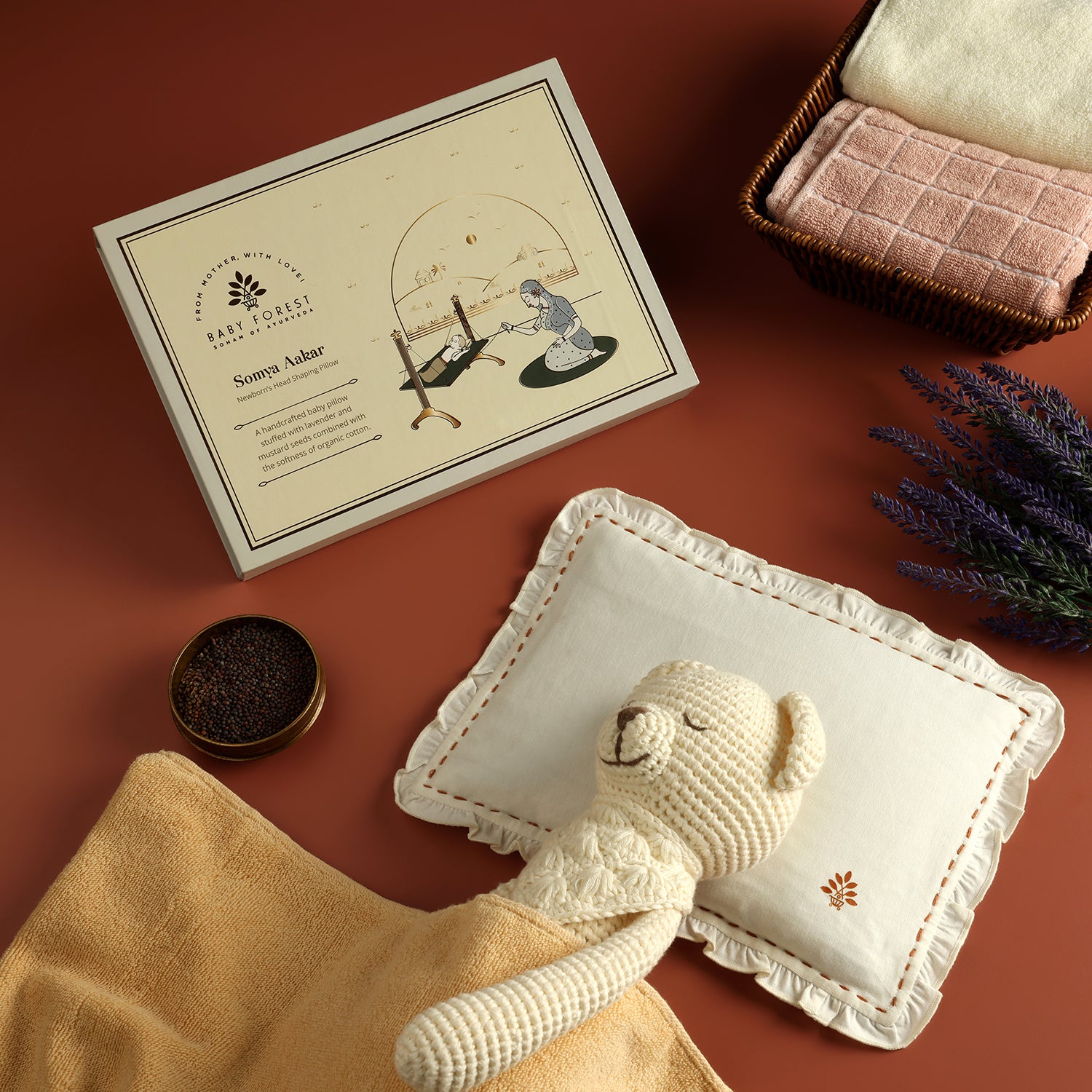
One gentle way to support your baby’s natural head shape is by using a specially designed newborn pillow made with soft, breathable materials. For instance, a mustard seed pillow like the Somya Aakar Newborn’s Head-Shaping Mustard Pillow by Baby Forest can offer gentle support and comfort for babies from 0 to 6 months, helping maintain a rounded head shape while allowing natural movement.
Natural Support: Filled with organic mustard seeds, the pillow gently molds to the shape of the baby’s head, providing even support that encourages natural head rounding. This soft, adaptable base also promotes healthy blood circulation and helps reduce the risk of flat head syndrome.
Soothing Comfort: Infused with dried lavender, the pillow offers a calming scent that helps relax your baby and promote restful sleep. The combination of gentle support and natural aroma creates a peaceful resting environment.
Soft, Safe Fabric: Crafted from 100% organic cotton, the pillow cover is breathable, hypoallergenic, and exceptionally gentle on delicate baby skin. It’s also removable and washable, ensuring easy care and long-lasting hygiene.

Preventing Flat Head Syndrome is easier than treating it. Here are some tips to keep in mind from the start:
Most cases of Flat Head Syndrome improve with time and simple interventions, but there are instances where professional help may be needed. Consult your pediatrician if:
Early intervention can make a big difference, so don’t hesitate to reach out if you’re concerned.
It’s natural for parents to feel a little concerned when they notice changes in their baby’s head shape. The good news is that mild flat spots are quite common and usually easy to manage with gentle care. Simple daily habits, like supervised tummy time, regular position changes, and using a supportive baby head pillow, can go a long way in helping your little one’s head develop naturally.
Addressing Flat Head Syndrome isn’t just about fixing a flat spot—it’s about supporting your baby’s overall development. Remember, every baby develops at their own pace, and with your love and attention, they’ll thrive.
So, take it one step at a time, enjoy these precious moments with your baby, and know that you’re doing a fantastic job. After all, a happy and healthy baby starts with small, thoughtful choices that show just how much you care.


