

A Complete Guide to Choosing Infant Gift Ideas That Are Truly Thoughtful
 Skip to main content

A Complete Guide to Choosing Infant Gift Ideas That Are Truly Thoughtful

Why Cleaning Baby Bottles Properly Matters for Your Baby’s Health

Why Choosing the Best Wipes for Newborns Matters More in Summer

How to Take Care of a Newborn in Indian Summer: Heat, Humidity, and Skin Safety

How to Build Your Newborn's First Baby Care Products Kit for the Summer Season
Numerous questions accompany the experience of becoming a parent, and among those concerns, feeding is one of the most common. The question many parents are quite puzzled about is when and/or whether they should introduce a bottle to a breastfeeding baby. For those who have considered this, they are not alone.
Raising a baby is a different experience for each family and has no one correct way that fits all. Breastfeeding is wonderful; however, it is also helpful to find methods to make feeding easier for both the baby and the parents. For a lot of families, baby feeding bottles become a supporting hand and not a replacement.
Here is a guide to help understand when and how bottle-feeding can be introduced to a baby, calmly and confidently.
Breastfeeding includes baby suckling and feeding directly from the breast. Bottle-feeding refers to offering milk through a baby feeding bottle. The milk may be expressed milk* or formula, whichever parents find convenient.
Most of the parents nowadays resort to combination feeding. In this, breastfeeding is combined with bottlefeeding. It makes feeding more adaptable and brings the family closer through shared involvement.
Introducing a baby milk bottle does not mean breastfeeding must stop. Many parents consider bottles to help them in breastfeeding, and not as a substitute. The feeding schedule changes with time; what was good in the initial weeks will appear different after a couple of months. And that’s totally okay.
The goal is simple. Parents need to feed, comfort, and love their baby. The technique can be altered with the baby’s growth and changes in daily routine.
*expressed milk: breast milk removed from the breast (by hand or pump) for later feeding
With so many opinions on feeding times, new parents can easily feel confused. Professionals recommend that a newborn baby be at least three to four weeks old before a bottle can be introduced into the diet. In other words, breastfeeding should be properly established first.
Around this time, babies generally latch with ease, and milk supply becomes more consistent. However, it is just a guideline and not a strict rule. Each baby is different, and so are the parents. Sometimes, parents may begin bottle-feeding at a younger age due to medical, emotional, or practical factors. Others may wait a little longer.
Parents need to find the right time when they feel comfortable and confident. It is also important to be careful of the baby’s habits and follow their feelings. The process of feeding should be relaxing, not stressful.


Parents may feel ready to introduce a bottle if:
The baby is latching and is comfortable to feed.
Breastfeeding feels more settled.
The baby is steadily gaining weight.
Parents are getting ready to go back to work.
Flexibility is needed for outings or rest.
Feeding moments are shared with a partner or carer.
These signs do not need to happen all at once. Even a few can be enough for a gentle start.
There could be a lot of different reasons for parents to choose bottle-feeding. Many parents resume work or have to go away briefly. Others desire rest, recovery, or personal time to recharge. Bottle-feeding also allows couples and the family to connect with the infant while feeding.
In some cases, medical or personal reasons guide this choice. Whatever the reason, it is valid. Feeding the baby is about care, not comparison.

Even with the right information, it’s natural for parents to have questions and concerns when introducing bottle-feeding. Addressing common worries with clarity and reassurance can help parents move forward with confidence.
This is a common concern. Most babies can comfortably move between the breast and a bottle when the transition is introduced gently and at their own pace. Using a slow-flow nipple with expressed breast milk helps the baby feel familiar and comfortable, rather than being introduced to something entirely new. Breastfeeding can still continue naturally, with many babies moving between both feeding methods comfortably.
Babies are often more adaptable than we expect, especially when changes are introduced gently. Choosing a newborn feeding bottle with a soft, breast-like nipple helps reduce confusion and keeps the experience familiar. When the bottle closely mimics the natural rhythm of breastfeeding, babies are more likely to feed calmly and comfortably.
Not at all. Babies don’t need feeding to be perfect; the process needs to be loving and responsive. For many parents, introducing a bottle is a thoughtful decision shaped by care, responsibility, or everyday needs. What matters most is that a baby feels nourished, comforted, and emotionally secure, no matter how they are fed.
Once the decision to introduce a bottle is made, the next step is gently easing the baby into this new experience. Here are some tips for parents to make this transition feel familiar.
Start slow and stay calm: Babies can easily feel stress around them. A relaxed atmosphere will make the process less stressful for both the baby and the parent.
Pick the right moment: Introduce the bottle at a time when the baby is hungry but also relaxed.
Let someone else try first: Sometimes babies accept a bottle more easily from another caregiver, especially in the beginning.
Use a slow-flow nipple: This helps match the baby's slow pace of breastfeeding and does not make them feel overwhelmed.
Be patient and consistent: Some babies may require several attempts before they become comfortable. It's best to avoid forcing the bottle.
Follow the baby’s cues: Wait when necessary, watch out for the signs of comfort and let the baby go at his or her own pace.
A gentle approach builds trust and helps babies feel secure during this transition.
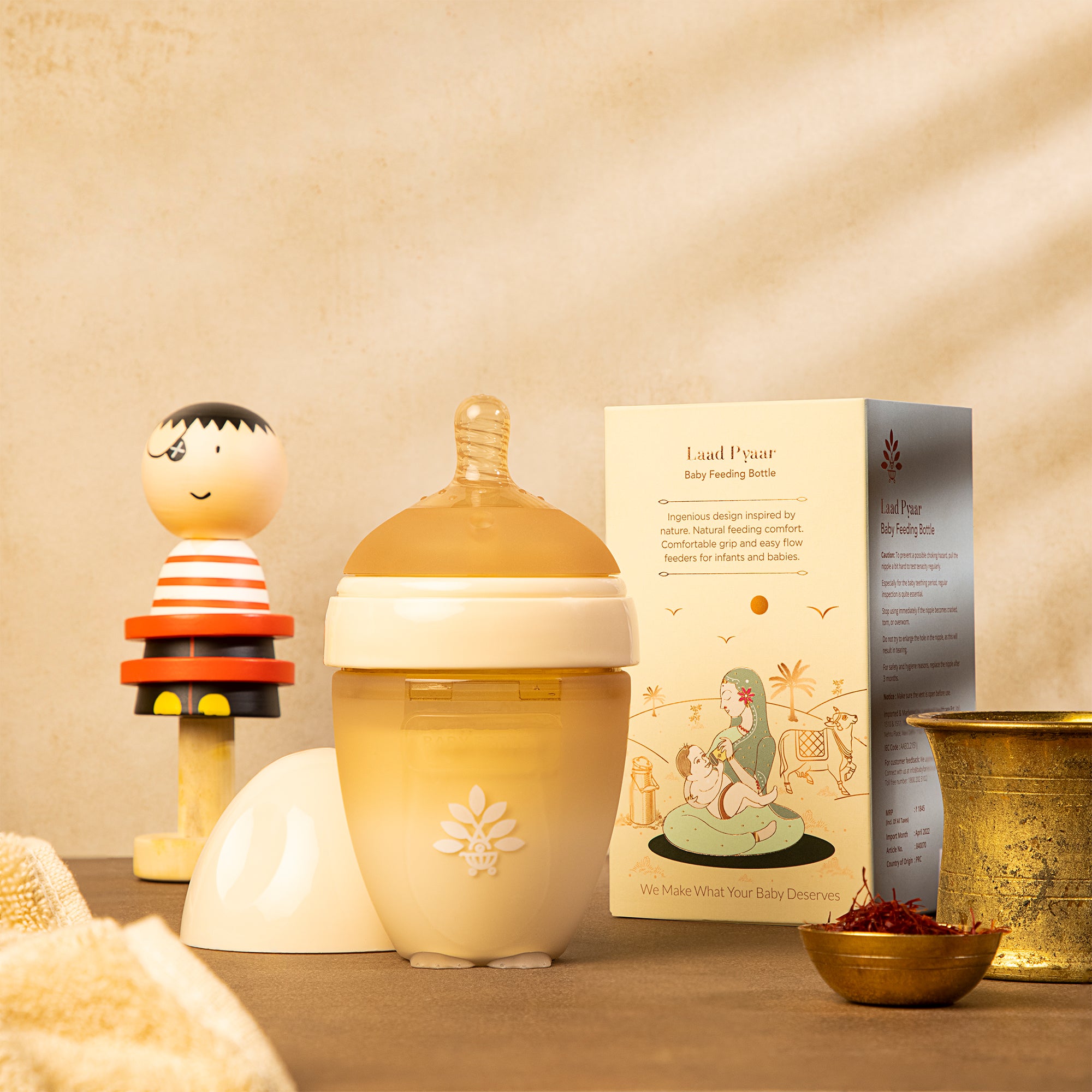
Choosing the right newborn baby feeding bottle can make a big difference. Look for a bottle with a soft, breast-like nipple shape. This helps babies latch comfortably. A slow-flow nipple is important. It mimics the natural rhythm of breastfeeding and prevents overfeeding. The bottle should be easy for parents to hold and comfortable for babies to grip. Many parents also prefer silicone bottles over plastic, as they feel softer and more natural and are free from toxins.
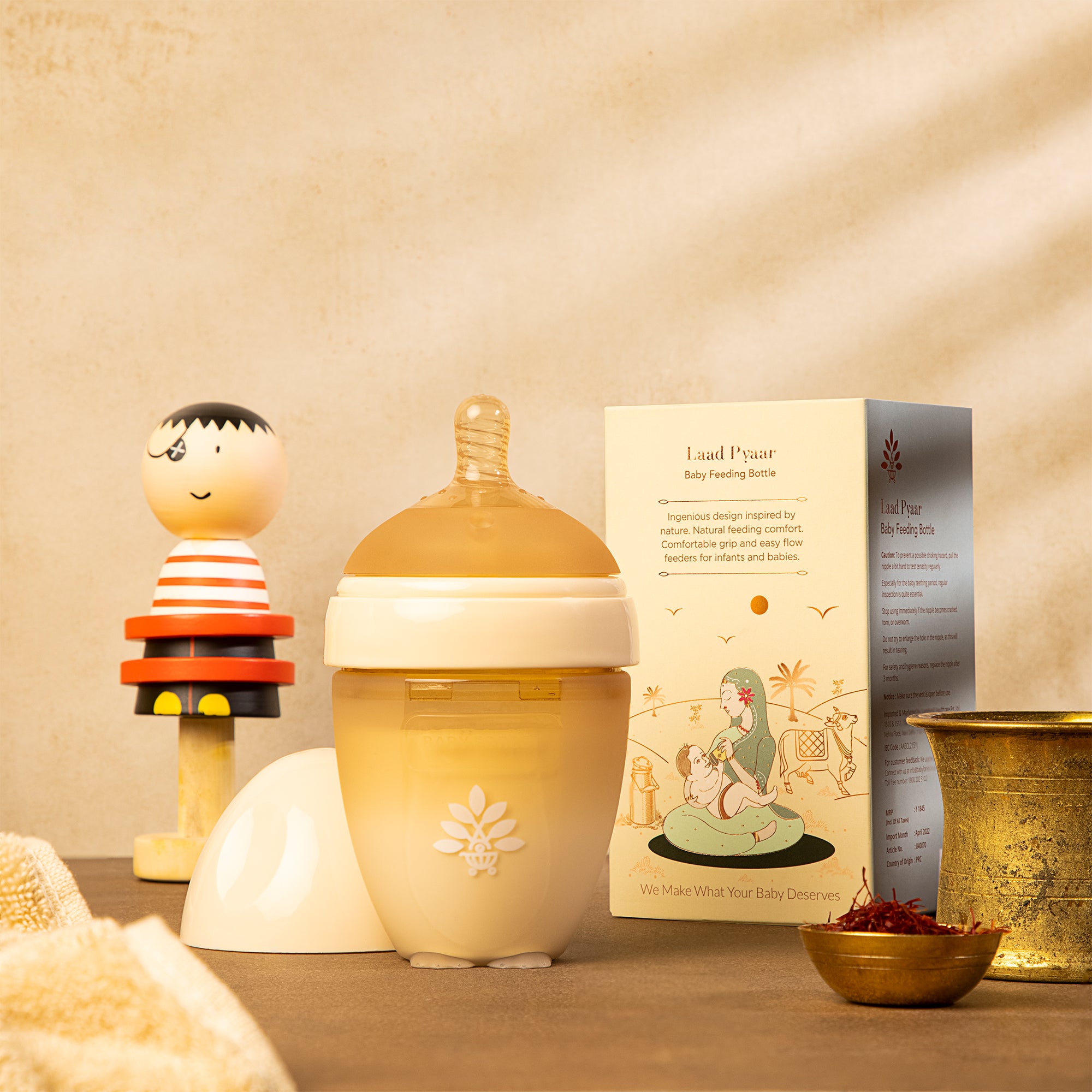
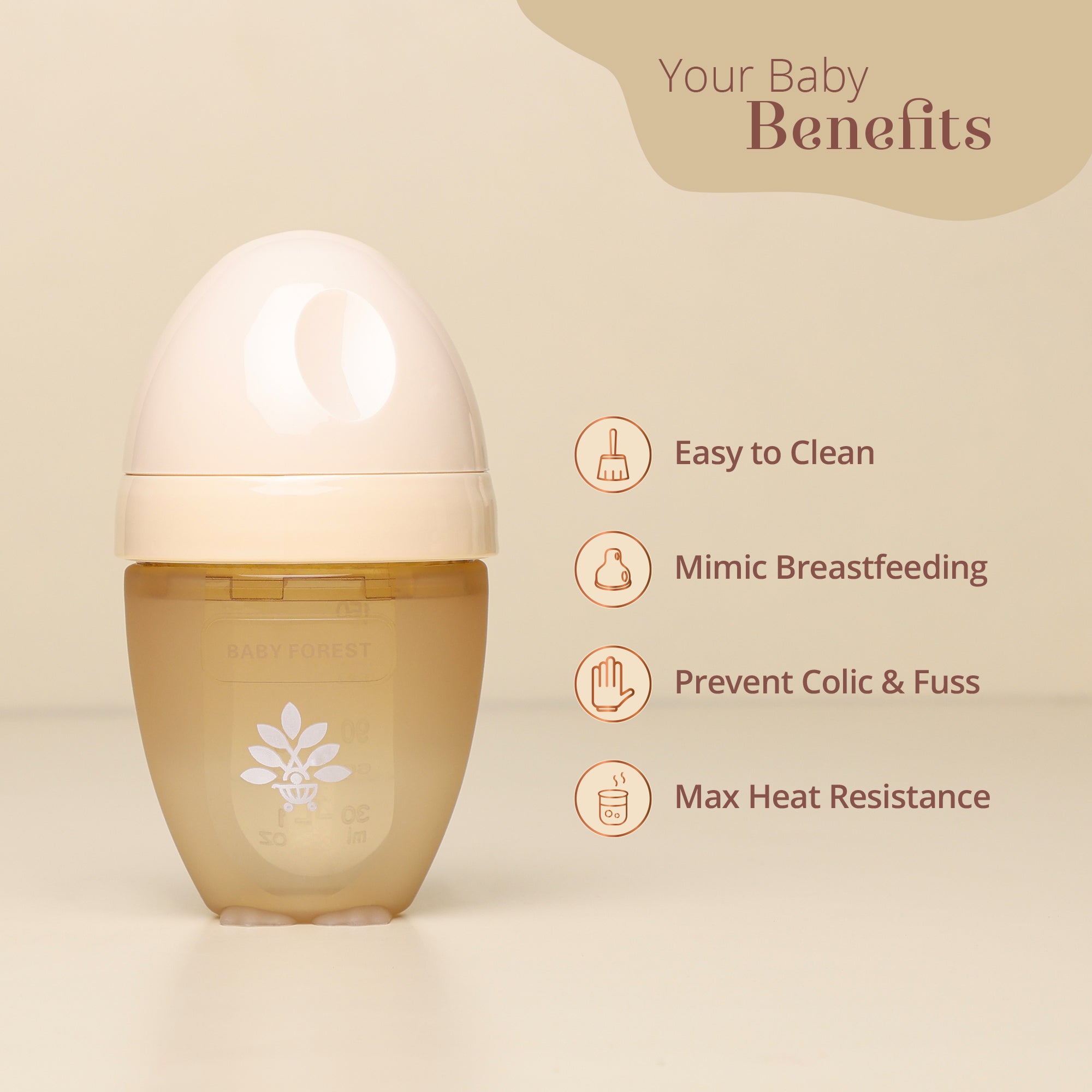
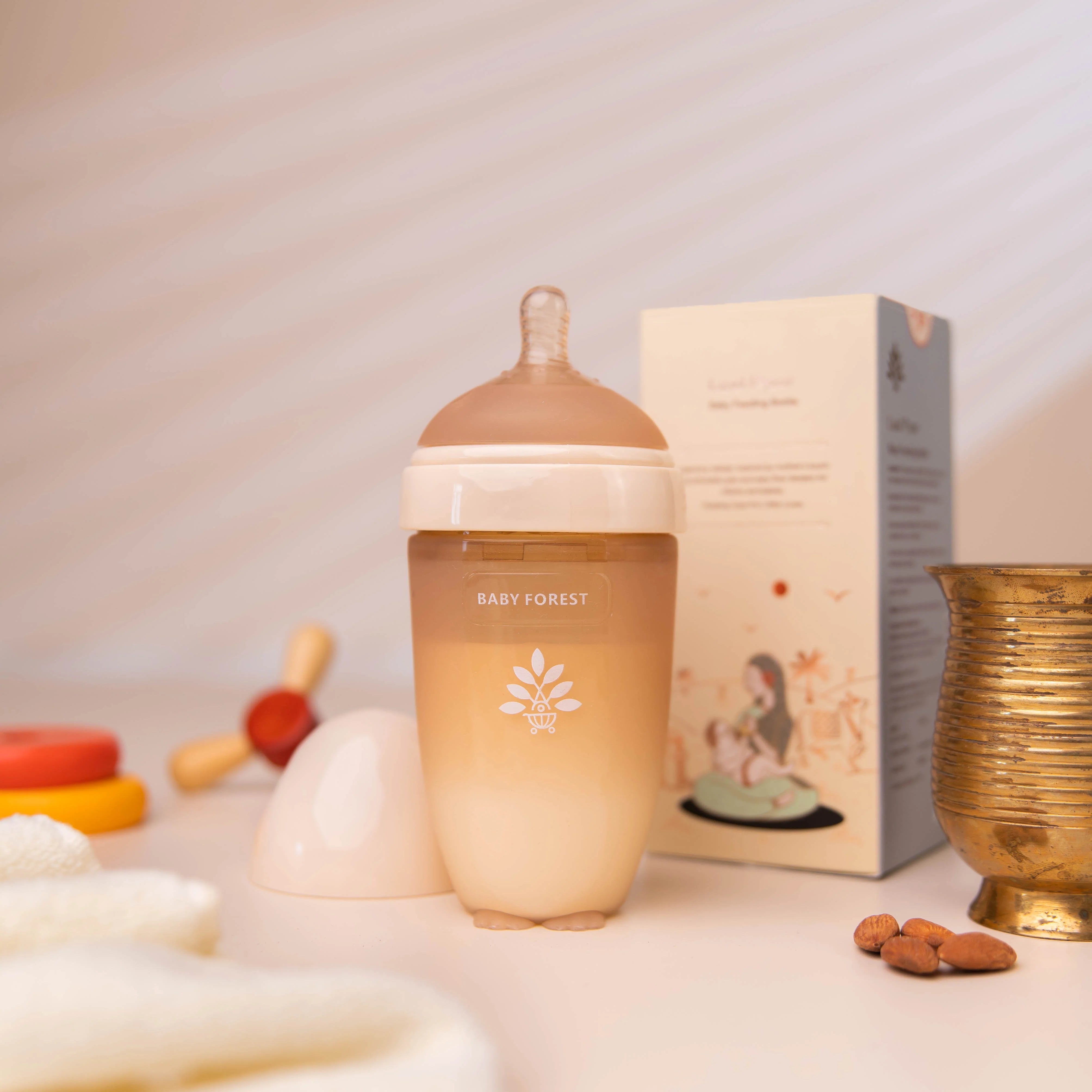
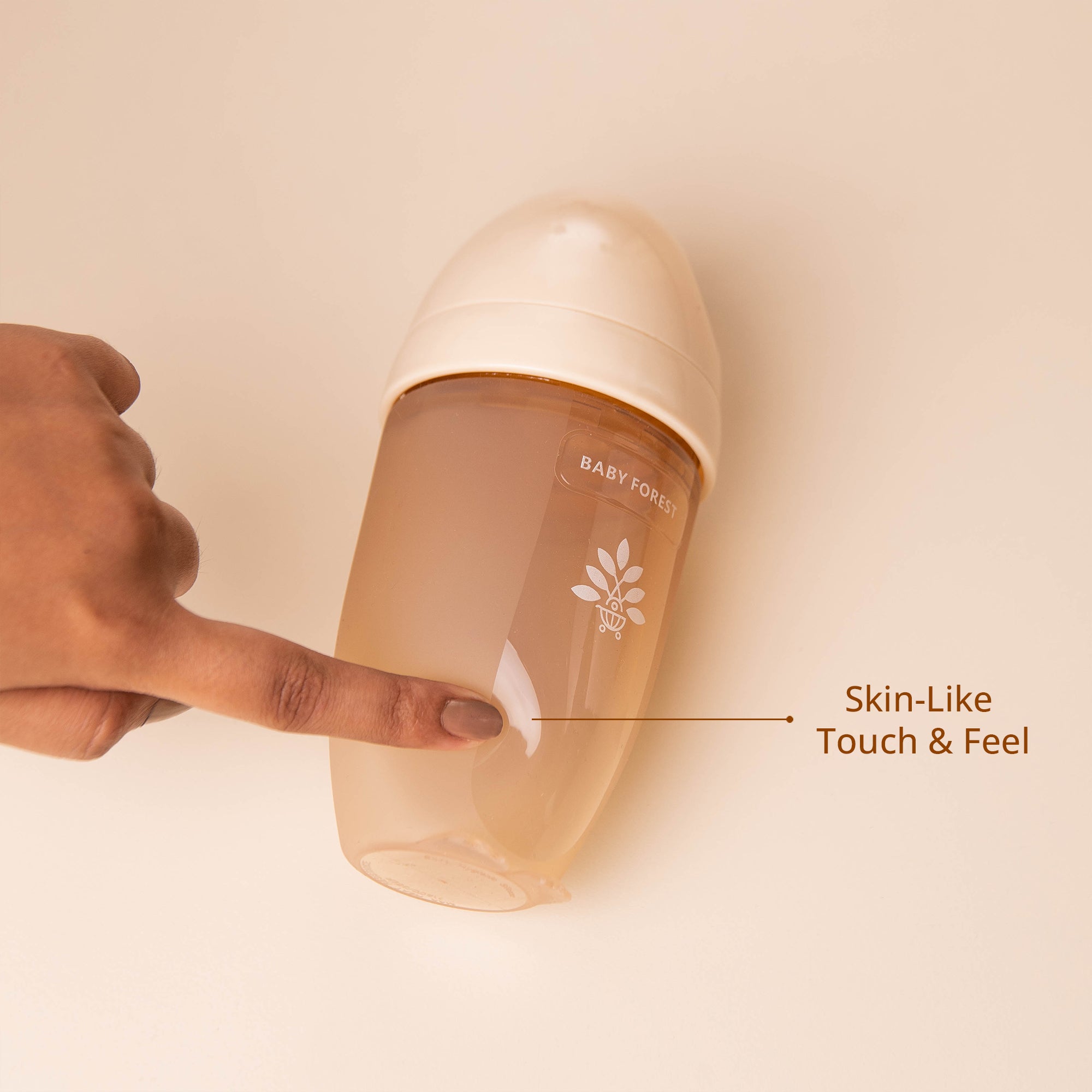
At Baby Forest, we created the Laad Pyaar Baby Feeding Bottle with these needs in mind. Inspired by nature, it is made from FDA-approved, non-toxic, food-grade material with a skin-like touch. It has dual anti-colic vents to reduce gas and fuss. The ultra-wide neck makes it easy to clean, and it is safe for sterilisers and boiling water up to 180°C.
Its soft shape mimics breastfeeding, making it a gentle option for babies transitioning between breastfeeding and bottlefeeding. While mother’s milk is always best, the right baby milk bottle can provide reassurance and support when needed.
Feeding choices do not define a parent. Love does. Whether families breastfeed, bottle-feed, or combine both, what matters most is that the baby is fed well and cared for. Feeding is also about cuddles, eye contact, and comfort. Parents can trust themselves and their baby, they are doing better than they think.
Every feeding journey is unique. There is no fixed timeline or perfect path. Some days feel easy, while others feel uncertain. That is part of parenting.
When doubts arise, support from healthcare professionals, lactation experts, or trusted caregivers can help. Parental instincts matter, and babies sense care in every feed. Feeding is more than nourishment; it is love, warmth, and connection. And that is exactly what babies receive.
Yes, the expressed breast milk can be given in a baby milk bottle. It is a popular method of introducing bottle-feeding with the ongoing breastfeeding. It helps babies to remain accustomed to the flavour of breast milk and enables the parents to support feeding. Always keep warm breast milk properly and a slow-flow nipple for comfort.