



Best Wet Wipes for Newborns: Key Ingredients and Factors to Consider
 Skip to main content

Best Wet Wipes for Newborns: Key Ingredients and Factors to Consider

Can Natural Ingredients Help Ease Newborn Cold Symptoms?

Soap vs Soap-free Cleanser: Which is Better for Babies?

Infant Solid Foods: A Beginner's Guide for Parents

Which Ingredients in Vapour Rub Help Ease Chest Congestion in a Newborn
Sunshine brings warmth, smiles, and outdoor joy, but for babies and young children, it also calls for thoughtful protection. Their skin is delicate, still developing, and far more sensitive to environmental stressors than adult skin.
That's why sun care for little ones isn’t just about preventing a tan, it’s about protecting their skin barrier, shielding skin from harmful UV rays, lowering the risk of sunburn, and promoting long-term skin health.
Choosing the right sunscreen for babies and kids can feel overwhelming with so many options on the shelf. This guide breaks it down simply, so you can protect your little one’s skin with confidence every time they step out into the sun.
Choosing the right sunscreen for your little one is about more than just SPF, it’s about safety, gentleness, and suitability for their delicate skin. Here are a few tips to choose the right sunscreen for your little one:

Under 6 months: Avoid direct sun. Use shade, hats, and protective clothing.
6 months and older: Introduce a baby-safe, mineral-based sunscreen. Toddlers and young children benefit from daily use as part of their skincare routine.
A child’s skin is thinner and absorbs more from its surroundings compared to adult skin. This makes it more vulnerable to:
Redness and irritation
Long-term sun damage
Sunscreen forms a protective barrier against harmful UV rays, allowing babies and kids to explore the outdoors safely without compromising their skin’s natural balance.
When selecting a sunscreen for little ones, look for:
SPF 30 or above.
Broad-spectrum protection.
Gentle and non-greasy.
Water and sweat-resistant.
Dermatologically tested for sensitive skin.
Tip: SPF30 is ideal for kids, as it blocks 97% of UVB rays and is suitable for everyday use.
Not all sunscreens are made for baby skin. Here are a few ingredients to avoid in sunscreens for little ones:
Oxybenzone
Octinoxate
Parabens
Phthalates
Artificial fragrances and dyes
These ingredients can be harsh, irritating, or too strong for young, developing skin.
Opt for sunscreens enriched with gentle, nourishing ingredients for little ones:
Mineral filters like zinc oxide
Natural oils and herbs that moisturize and soothe
Antioxidants that support skin health
Non-toxic ingredients
These help protect while also caring for the skin, because sun protection should never come at the cost of comfort.
*Oxybenzone: A chemical sunscreen ingredient that can be absorbed into the skin. Baby’s skin is extra delicate, so this ingredient may increase the risk of irritation or sensitivity.
*Octinoxate: Often used to absorb UVB rays, but it can be too strong for babies and may cause skin reactions on sensitive or developing skin.
Use a generous amount on all exposed areas: face, neck, ears, arms, legs
Apply 15–20 minutes before sun exposure
Reapply every 2–3 hours, especially after water play or sweating
Use soft strokes, never rub harshly
Making sunscreen a part of your little ones' daily routine helps build lifelong sun-safe habits. Also, it is advised to do a patch test before using the sunscreen.
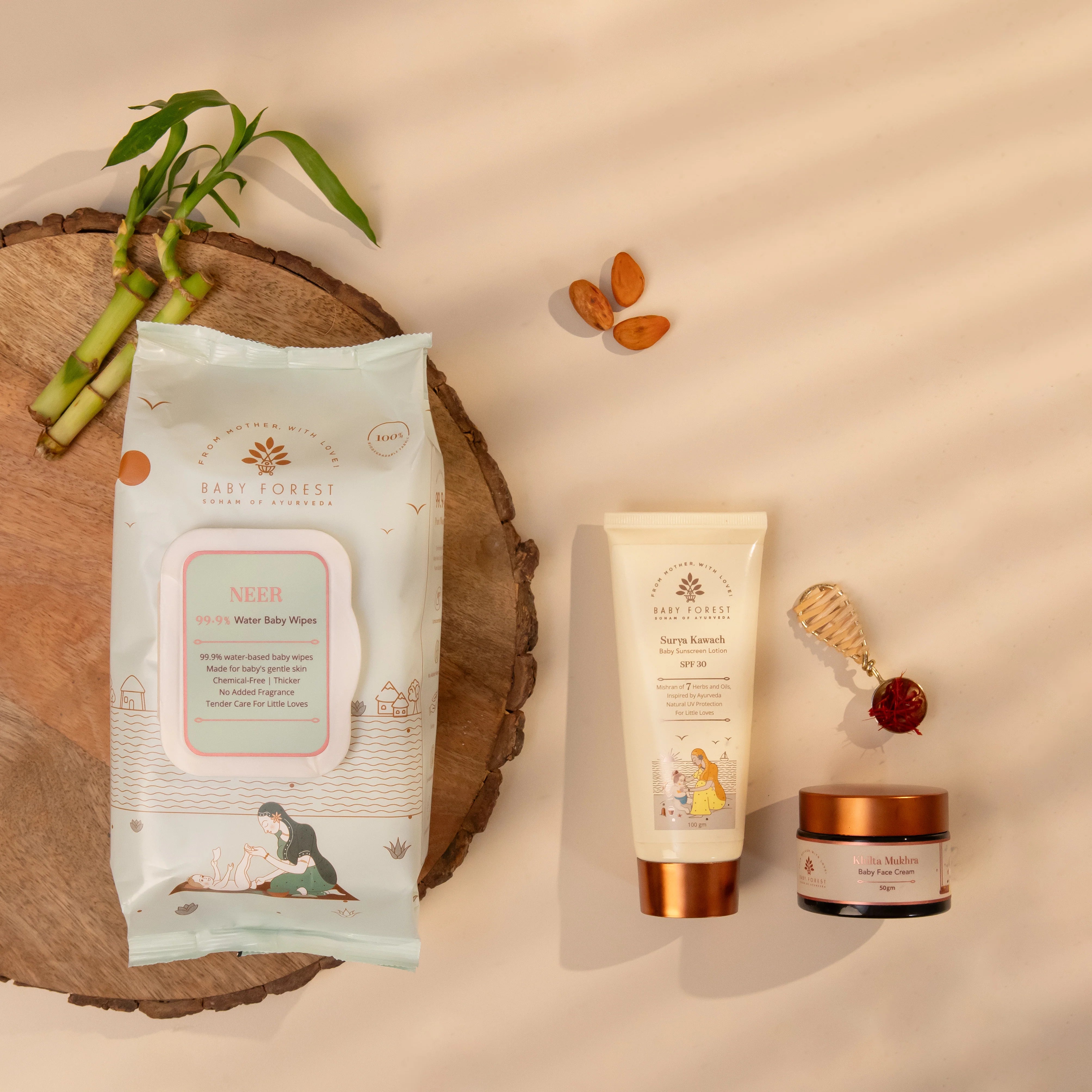
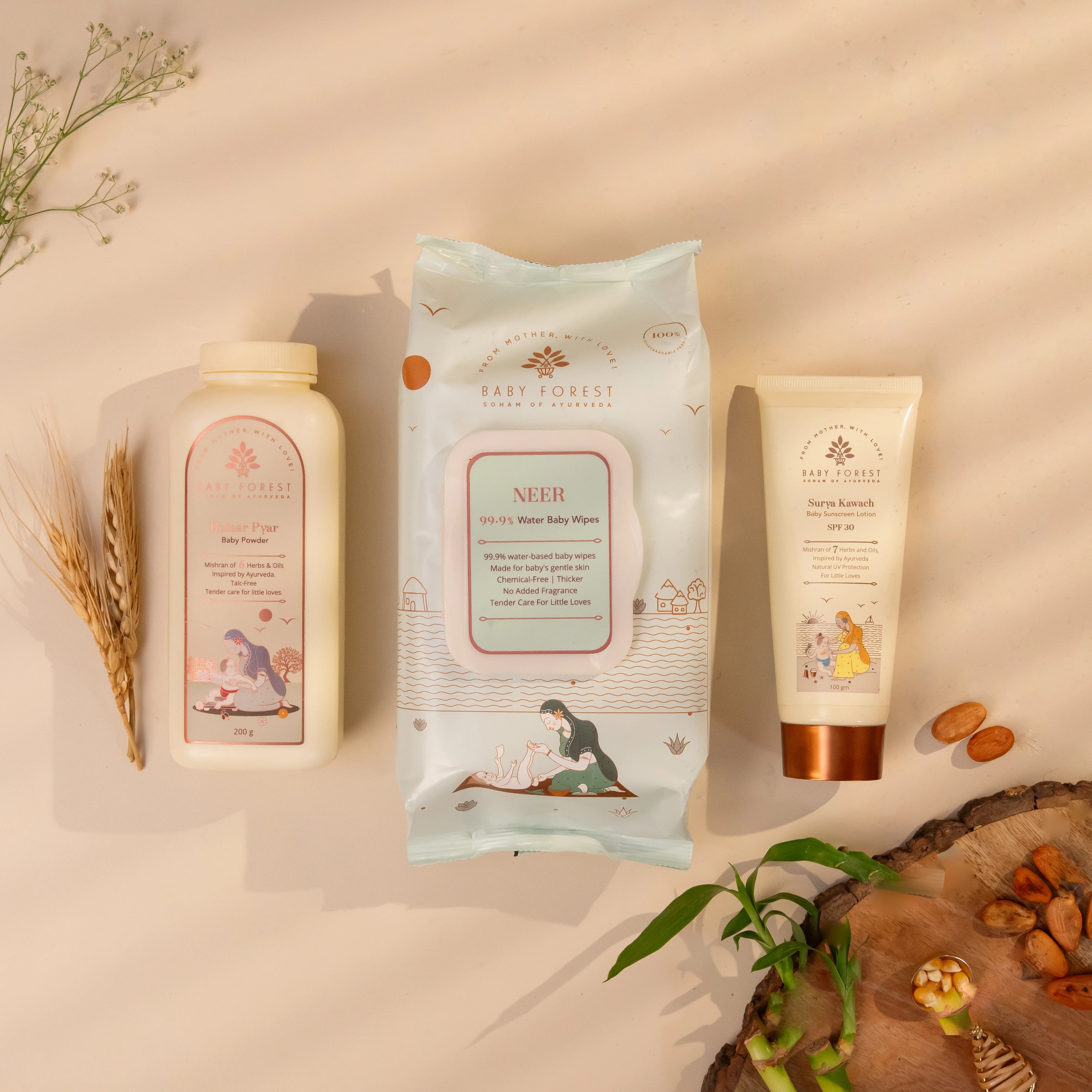
Baby Forest Surya Kawach SPF30 baby sunscreen lotion is created with a clear understanding that babies' and young children's skin needs sun protection that is effective yet gentle. It offers SPF 30 protection, suitable for everyday outdoor exposure.

Made using 10 natural herbs and beneficial oils that help protect and care for delicate skin. Ingredients such as sea buckthorn oil help protect a baby's skin from dryness while keeping it moisturised, carrot oil supports full-spectrum protection, and red raspberry is known for offering natural UV protection benefits. Aloe vera, known for its nourishing and soothing properties, retains natural moisture and leaves skin smooth and supple even after sun exposure.
Its lightweight, lotion-based texture spreads easily, absorbs quickly, and leaves no white cast. The finish is soft, hydrating, and non-greasy, making it comfortable for babies and active kids alike. Thoughtfully formulated for sensitive skin, it is safe for everyday use, so time spent outdoors feels easy and worry-free.
Using adult sunscreen on children can lead to irritation, rashes, or discomfort. A baby-specific sunscreen is always the safer choice. Baby skin is very different from adult skin, which is why regular sunscreens made for grown-ups may not be suitable for little ones.
The table below shows the key difference that makes baby-specific sun protection essential.
|
Factor |
Baby Skin |
Adult Skin |
|
Thickness |
30% thinner, absorbs chemicals more easily. |
Thicker protective barrier with lower absorption. |
|
Sensitivity |
Higher pH, more prone to irritation and rashes. |
Balanced pH, generally more resilient. |
|
Melanin (Natural Protection) |
Lower melanin levels, higher risk of sunburn. |
More developed melanin (varied by skin tone). |
|
Oil & Sweat Glands |
Underdeveloped glands, less natural moisture & protection. |
Fully functional glands that regulate hydration & body temperature. |
Sunscreen is an important part of sun safety, but it works best when paired with a few simple everyday habits. Along with applying sunscreen, these additional sun protection tips keep babies and kids comfortable, protected, and happy while enjoying time outdoors.
Choose wide-brimmed hats that shield your child’s face, ears, and neck from direct sunlight. Choose a hat with a chin strap to keep it secure during outdoor adventures. Ensure that it’s comfortable and fits snugly to stay put.
Dress babies and kids in lightweight, breathable, full-sleeve cotton clothing or a fabric with a tight weave to add an extra layer of protection.
Use strollers with sun canopies, umbrellas, or portable shades when stepping outdoors. Also consider carrying a pop-up tent for picnic days.
Whenever possible, keep little ones in shaded areas, away from direct sunlight exposure, especially with infants who have very sensitive skin.
Plan outdoor activities to avoid peak sun hours from 10 AM to 4 PM, whenever possible. This is the time when the sun's rays are the strongest.
Sun protection is an essential part of caring for your little one’s skin, not just during summer, but every time they step outdoors. Because little ones have delicate, developing skin, choosing the right sunscreen and supporting it with mindful sun-safe habits can make a meaningful difference to their comfort and long-term skin health.
After all, protecting your little one from the sun today helps nurture healthy, happy skin for the years to come.
Here is a step-by-step guide to applying sunscreen:


