
A Complete Guide to Choosing Infant Gift Ideas That Are Truly Thoughtful
 Skip to main content

A Complete Guide to Choosing Infant Gift Ideas That Are Truly Thoughtful

Why Cleaning Baby Bottles Properly Matters for Your Baby’s Health

Why Choosing the Best Wipes for Newborns Matters More in Summer

How to Take Care of a Newborn in Indian Summer: Heat, Humidity, and Skin Safety

How to Build Your Newborn's First Baby Care Products Kit for the Summer Season
A baby’s skin is softer and more delicate, so it takes time to get used to its surroundings. Even a little exposure to heat or sunlight can affect it quickly. Sometimes, just a few minutes outdoors can leave the skin looking slightly red or feeling uneasy.
This is why sun protection becomes something parents start thinking about early on. Even short outings, trips, or direct sunlight at home can affect delicate baby skin. A baby sunscreen, specifically formulated for sensitive skin, offers protection without introducing harsh chemicals or adding unnecessary steps to the routine.
For babies younger than six months, parents usually rely more on shade, clothing, and limiting direct sun exposure. As babies grow older, especially after six months, sunscreen becomes a more practical part of daily care when going outdoors.
Most parents choose to use baby sunscreen only when necessary, rather than applying it constantly. The goal is to offer protection when sun exposure is unavoidable. Choosing a formulation made specifically for babies makes a noticeable difference because it is designed to sit comfortably on sensitive skin.
A good sunscreen helps protect against UVA and UVB rays, both of which can affect the skin. But beyond protection, parents also pay attention to how the product feels during use. If it spreads easily and does not cause discomfort, it becomes easier to use regularly without hesitation.
SPF numbers often sound more complicated than they actually are. In simple terms, SPF shows how much protection a sunscreen provides against UVB rays.

SPF 30 blocks about 97% of UVB rays: It allows a small amount of sunlight through but still provides strong protection for daily outdoor time, perfect for little ones playing or travelling outside.
SPF 50 blocks about 98% of UVB rays: It offers slightly higher protection and is usually preferred for longer outdoor exposure.
The gap between them is minimal. What matters more is how evenly the sunscreen is applied and how often it is reapplied.
In everyday situations, SPF 30 is generally enough when choosing a sunscreen for baby face, especially when babies are not exposed to harsh sunlight for long periods. Beyond the SPF number, many parents find that selecting a sunscreen depends on how easy it is to use and how well it fits into their routine.
When parents choose products for babies, they usually notice how the product feels on the skin rather than just what is written on the label.
The best baby sunscreen is usually one that feels effortless on the skin and fits easily into everyday use. Since baby skin can react quickly, parents tend to prefer formulations that feel simple and balanced.
A few things that naturally matter while choosing:
The sunscreen should not feel sticky or thick.
It should not leave the skin looking overly white or coated.
It should help keep the skin from feeling dry after use.
It should feel easy enough to apply even when the baby is moving.
Products that tick these boxes usually become easier to apply, which helps parents continue using them over time.
Without proper sun protection, baby skin can become red, dry, or irritated, especially during warmer months. Even short periods outdoors can sometimes lead to sunburn or moisture loss because baby skin is still very sensitive and loses hydration quickly in heat and sunlight.
Because of this, many parents start looking for ways to protect their baby’s skin during outdoor time. Using a baby sunscreen made for sensitive skin helps provide sun protection while also helping the skin stay soft and moisturised, making outdoor time more comfortable for the baby.
Baby Forest’s Surya Kawach SPF 30 Baby Sunscreen Lotion is designed to fit naturally into daily baby care without feeling like an extra step. It focuses on protection while still keeping the skin comfortable.
This baby sunscreen is inspired by Ayurvedic care and has a combination of ingredients that support both protection and nourishment. Once applied, the texture feels light and settles into the skin without leaving a heavy or oily layer.
For parents looking for a sunscreen for baby face, this becomes important because facial skin tends to be more sensitive and exposed. When a product feels comfortable on the skin and easy to apply, parents are more likely to continue using it as part of daily care.
What goes into a product often reflects how it feels during use.
Yashad Bhasm helps form a protective layer against external exposure
Shea Butter supports softness and helps prevent dryness
Cocoa Butter adds nourishment and keeps the skin from feeling tight
Carrot Oil is known for its role in supporting natural sun care
Aloe Vera helps soothe and maintain hydration
Red Raspberry supports the skin’s natural balance
Daffodil brings a calming effect to the formulation
Seabuckthorn Oil helps nourish and support skin protection
Together, these ingredients support both protection and everyday comfort without making the formulation feel heavy or complicated.
During summer, sun protection is not just about sunscreen. Many parents prefer following a simple routine that includes sun protection, gentle cleansing, and light moisturizing to keep the baby’s skin comfortable.
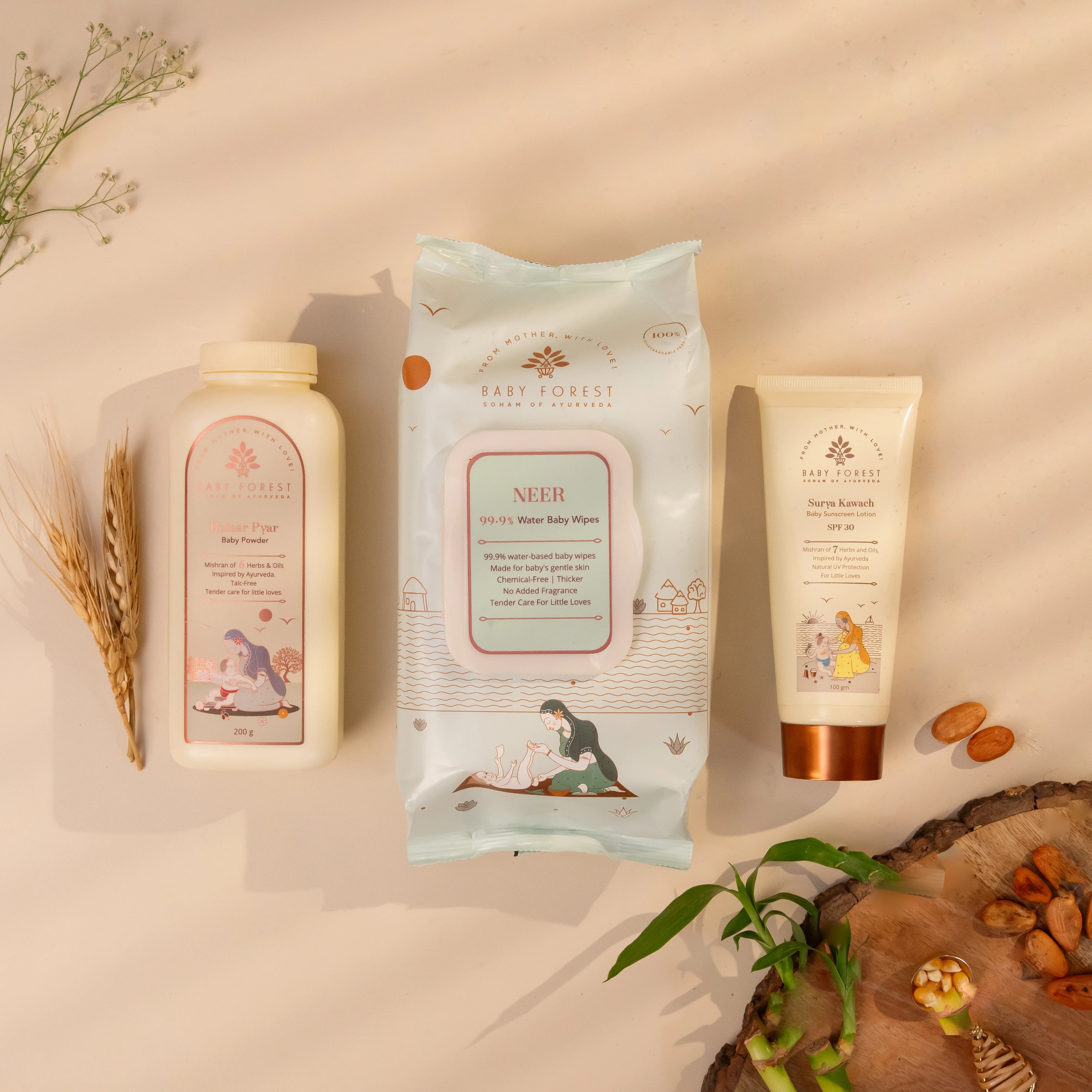
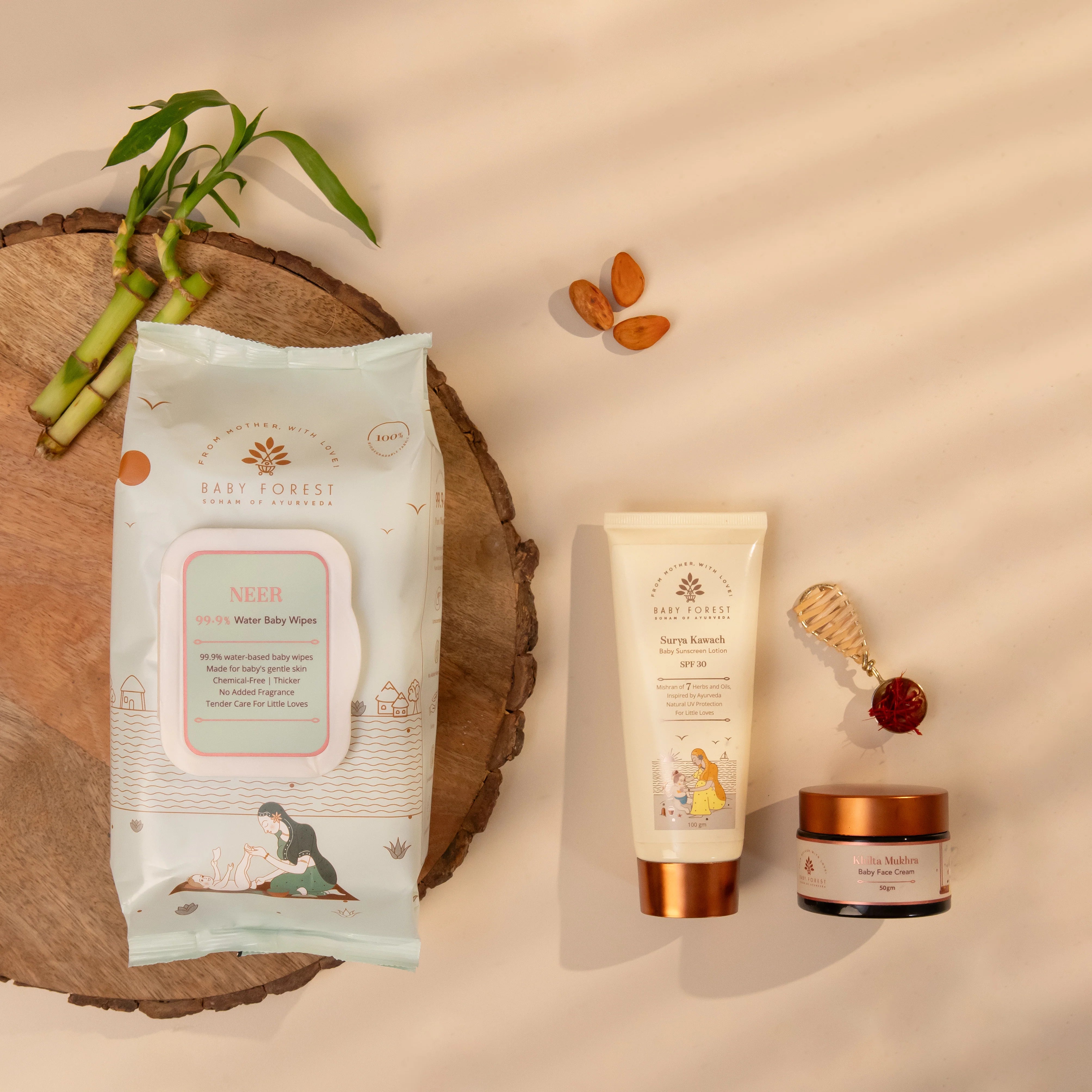
The Baby Forest Baby Summer Skincare Combo is designed keeping this routine in mind. It includes:
Surya Kawach SPF 30 Baby Sunscreen Lotion to help protect from sun exposure
Khilta Mukhra Baby Face Cream to help keep the skin soft and moisturized
Neer 99.9% Baby Water Wipes for gentle and quick cleaning during the day
Used together, these products help parents manage sun exposure, dryness, and sensitivity during warmer months without making the routine complicated.
Sunscreen works best when it is not the only step taken for sun protection. Parents usually combine it with simple habits like keeping babies in shaded areas, dressing them in light clothing, and avoiding direct sunlight during peak hours. These small steps often make a bigger difference than relying on sunscreen alone.
When applying sunscreen, it does not need to be applied in large amounts. A small amount is enough, as long as it is spread evenly. Areas like the cheeks, neck, and ears are often the most exposed, so they need a little extra attention.
Take a small amount of Baby Forest Surya Kawach Sunscreen Lotion, rub it between your palms, and gently apply it to your baby's face and body. Pay extra attention to the cheeks, neck, and ears.
Choosing between SPF 30 and SPF 50 can feel confusing, but the practical difference between them is not as big as it seems. What matters more is how well the sunscreen fits into your routine.
A baby sunscreen that's lightweight, easily glides into the skin and comfortable to apply is far more likely to become part of daily care. And that consistency is what helps protect a baby’s skin over time.
When paired with simple practices like staying in the shade and using protective clothing, sun care shifts from chasing the highest SPF to building a routine that truly works.