
Regular vs Talc-Free Baby Powder: 7 Key Differences for Indian Parents
 Skip to main content

Regular vs Talc-Free Baby Powder: 7 Key Differences for Indian Parents

Diaper Rash in Babies: A Guide to Preventing & Healing Diaper Rashes

SPF 30 vs SPF 50 Sunscreen: What’s Best for Your Baby?

First 6 Months of a Baby: Traditional Practices & Common Mistakes to Avoid

200 Unique Indian Baby Girl Names for Your Little Princess
Babies may be tiny, but their laundry pile is never small. Between milk spills, poop stains, food messes, and constant outfit changes, baby clothes need washing almost every day. However, the real worry for parents is not just stains, it’s whether the detergent is too harsh for sensitive baby skin and leaves behind residue that can trigger irritation. That’s why choosing the right liquid detergent can make a big difference.
In this blog, we’ll break down common baby laundry concerns, how to wash baby clothes safely, remove stubborn stains, and what to look for in a gentle baby detergent that cleans well without compromising comfort.
When it comes to baby clothes, cleaning isn’t just about making them look fresh, it’s about keeping them soft and safe for delicate skin. Here, a good liquid detergent can be a smarter option for daily baby laundry because it cleans gently yet effectively without being too harsh on fabrics.

Unlike detergent powders that may leave behind residue, liquid detergent mixes well with water and rinse out easily. This reduces the chances of detergent build-up on baby clothes, which can sometimes lead to irritation.
Baby clothes are usually made from soft cotton and delicate fabrics. Liquid detergents tend to be milder on fabric fibres, helping keep clothes smooth and wearable after a wash.
From milk spills to food drops and diaper leaks, baby stains are frequent. A good liquid detergent can lift dirt and mess more effectively, making baby laundry less stressful for parents.
When it comes to baby laundry, not all detergents are safe for babies' skin. Baby clothes touch sensitive areas like the neck, underarms, and diaper region, so even small amounts of residue or strong additives can feel uncomfortable. That’s why many parents prefer a baby liquid detergent over a regular detergent because the formula is made with baby skin and fabrics in mind.
Baby liquid detergent is typically gentler and avoids common irritants, helping reduce the chances of dryness, redness, or post-wash itching, especially for newborns and eczema-prone babies.
Regular laundry detergents often include stronger cleansing agents or intense fragrances to tackle adult laundry. For babies, these can sometimes leave behind residue or a musty smell that isn’t ideal.
Since baby clothes, towels, and burp cloths are washed so often, a liquid detergent for baby’s clothes can clean effectively while being more considerate to soft cotton and delicate fibres, helping clothes stay comfortable after every wash.
Baby laundry isn’t just about washing clothes, it’s about keeping your baby irritation-free and fresh all day. So, here are some everyday concerns parents face and what you can do to solve these problems.
If your baby develops redness or itching, the issue may not be the fabric, it can often be detergent residue, strong fragrance, or harsh cleaning agents.
Quick Fix: Use a gentle baby liquid detergent, avoid using extra product and add an extra rinse if your baby has sensitive skin.
Baby stains are usually protein-based (milk) or pigment-heavy (food like banana or turmeric), and they leave a stain quickly if left too long.
Quick Fix: Rinse immediately, pre-soak stained clothes, and wash them sooner using an effective liquid detergent that is safe for frequent use.
This usually happens due to moisture left in fabric, especially during monsoons, or when clothes are dried indoors without proper airflow.
Quick Fix: Don’t leave clothes sitting in the washer for too long, dry them completely, and ensure proper ventilation.
Many parents think hand washing is gentler, but machine washing can be just as safe if you use the right settings.
Quick Fix: Choose a baby-friendly detergent and wash on a gentle cycle. For heavily soiled clothes, a quick pre-rinse helps.
Baby clothes often deal with spills, sweat, drool, and stains, which often happen multiple times a day. So, here are some simple steps on doing baby laundry that can be simple, safe, and effective.
Step 1: Pre-wash new baby clothes before first use
Even brand-new clothes can carry dust and packaging residue from storage. Wash all new baby clothes, blankets, towels, and swaddles before your baby wears or uses them.
Step 2: Sort baby laundry smartly
Sorting helps clothes wash better and stay soft. Separate heavily soiled clothes (poop/food stains) and light cotton clothes, towels, sheets, and thicker fabrics separately.
Step 3: Pick the right wash setting
If you’re using a washing machine, gentle cycles are best for baby clothes. Choose a gentle cycle for daily baby clothes, a normal cycle for towels and bedsheets and warm water for stubborn stains, if the fabric allows.
Step 4: Use the right amount of liquid detergent
Using more detergent doesn’t mean cleaner clothes. This usually causes residue build-up. Stick to the recommended quantity based on load size, and avoid over-pouring.
Step 5: Rinse well
For newborns or sensitive-skin babies, an extra rinse can help remove any leftover detergent traces. You can add a second rinse when clothes feel stiff or when your baby is prone to rashes.
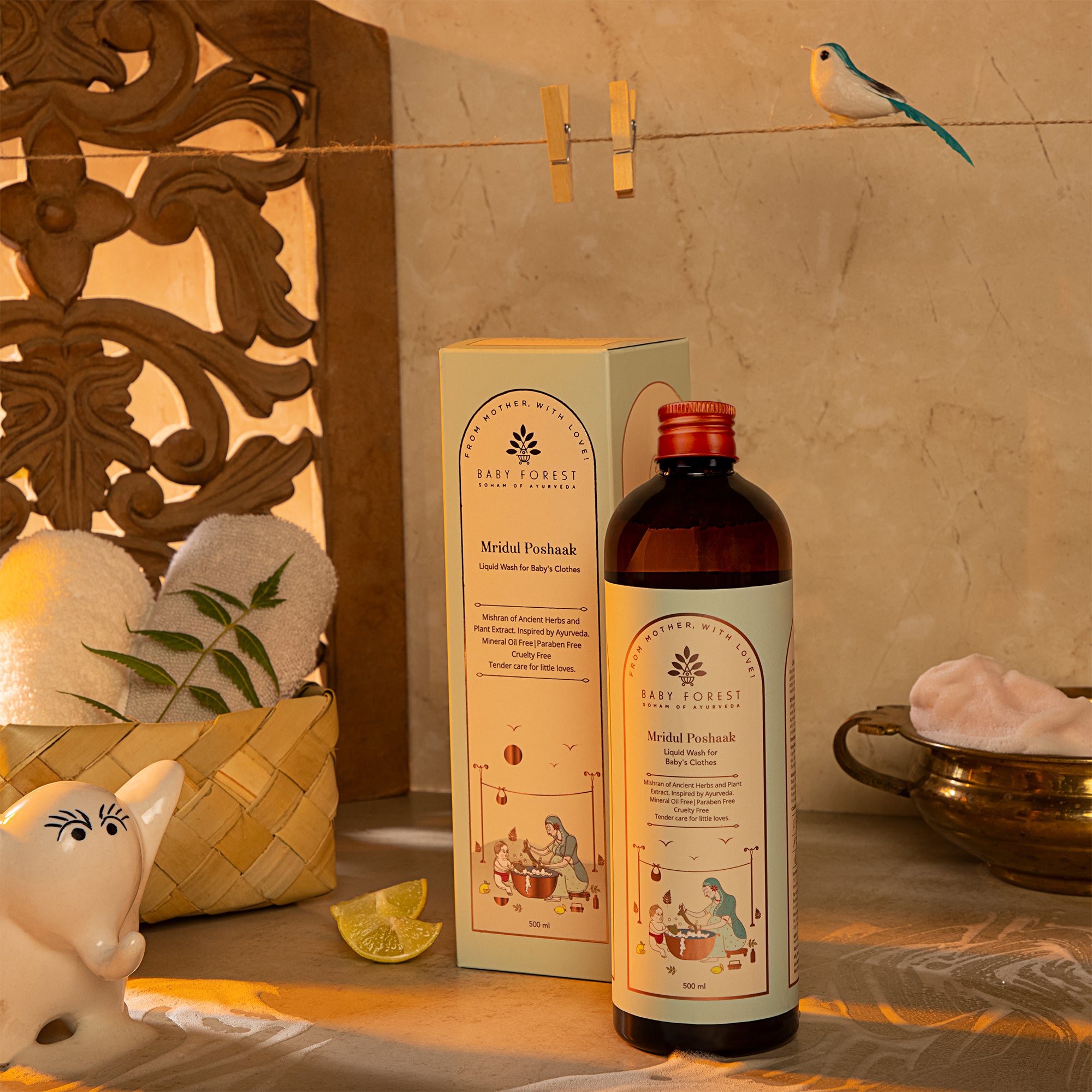
Note: A liquid detergent for babies like Mridul Poshaak supports both handwashing and machine washing routines, making daily laundry easier for parents.
Since babies have delicate, sensitive skin, choosing the right liquid detergent often comes down to the ingredients inside it. Here are the key ingredient checks parents should make before picking a baby detergent.

The best baby laundry detergent should clean effectively without being harsh on baby clothes. Mild surfactants help remove dirt and stains while keeping fabrics soft, making them ideal for daily baby laundry.
Babies drool, spit up, and sweat, so hygiene becomes important even if clothes don’t look dirty. Ingredients like Neem leaf extract are known for their antibacterial and antiseptic properties, helping baby clothes stay cleaner and fresher with every wash.
Milk stains, food spills, and weaning messes are common, and parents often don’t want to rely on harsh stain removers. Ingredients like lemon fruit extract and lemon peel oil can help tackle everyday stains while also keeping clothes feeling fresh.
For babies, especially newborns, it’s best to avoid detergents with unnecessary additives that can feel too strong on the skin. Always look for options that are free from added colour, artificial fragrance, parabens and harsh chemicals.
Even a well-formulated detergent can cause discomfort if it leaves residue behind. A liquid baby detergent rinses out easily, so baby clothes feel soft, breathable, and irritation-free after every wash.
Even with the right liquid detergent, baby laundry can feel overwhelming if the routine isn’t consistent. However, small habits can make a big difference in keeping baby clothes soft, clean, and irritation-free.
| Do’s | Don’ts |
| Use a gentle liquid detergent made for baby clothes to reduce irritation risk | Don’t use strongly fragranced or harsh regular detergents on baby laundry |
| Measure detergent properly so it rinses out clean | Don’t overuse detergent, as it can leave residue and make clothes stiff |
| Pre-treat stains early (milk, poop, food) before washing | Don’t let stains sit for long, they set and become harder to remove |
| Wash baby essentials often (burp cloths, bibs, towels, bedsheets) | Don’t delay washing frequently used items, as they can trap milk and drool |
| Add an extra rinse if your baby has sensitive skin or rashes | Rinse well if clothes feel soapy or smell strongly of detergent |
| Dry clothes completely with good airflow to avoid a damp smell | Don’t store baby clothes when even slightly damp |
Baby laundry may seem like a small everyday task, but it plays a big role in your baby’s comfort and skin health. Since baby clothes, towels, and essentials come in direct contact with delicate skin all day, choosing the right liquid detergent matters more than most parents realise. A gentle baby-friendly formula can help remove stains, rinse out cleanly, and reduce the chances of irritation. These little choices may feel minor, but they make a meaningful difference every single day.
Start early. Rinse stains under running water, then soak in lukewarm water for 15–30 minutes. For poop or collar stains, gently rub a few drops of baby detergent on the spot and wash the same day. Avoid strong stain removers on baby fabrics. A mild option like Mridul Poshaak helps lift daily stains while staying gentle.