


A Complete Guide to Choosing Infant Gift Ideas That Are Truly Thoughtful
 Skip to main content

A Complete Guide to Choosing Infant Gift Ideas That Are Truly Thoughtful

Why Choosing the Best Wipes for Newborns Matters More in Summer

How to Take Care of a Newborn in Indian Summer: Heat, Humidity, and Skin Safety

How to Build Your Newborn's First Baby Care Products Kit for the Summer Season

Newborn Sleep Tips That Work With Your Baby’s Natural Sleep Patterns
Feeding your baby is part of an everyday routine, but bottles that are not cleaned properly after each use can slowly become a source of discomfort for infants. Leftover milk residue and improper cleaning may affect bottle hygiene over time, and repeated use can make babies feel uneasy without showing immediate warning signs.
Since a baby’s immune system is still developing, even small hygiene negligence can have a bigger impact on overall health and comfort than parents expect.
Let's understand why cleaning baby bottles should become a crucial daily habit to keep your little one’s delicate system healthy.
Here’s why clean feeding habits matter for your baby’s safety and daily comfort.
Milk left inside baby bottles creates an ideal environment for bacteria to grow rapidly.
Even small traces can spoil within a few hours, especially in warm surroundings.
If the bottle is not cleaned properly, these bacteria can spread across the inner surface, nipple, and cap.
During the next feed, they may mix with fresh milk and enter your baby’s system.
Since infants have developing immunity, even minimal exposure can lead to illness.
Regular and thorough cleaning of baby bottles helps remove harmful germs before they build up, ensuring every feed stays safe and hygienic.
A poorly cleaned baby feeding bottle can carry bacteria that directly affect an infant’s digestive system.
This can result in symptoms such as diarrhea, vomiting, gas, or general discomfort after feeding.
Babies are highly sensitive, so even slight contamination can lead to noticeable reactions.
The risk becomes higher when bottles are used frequently throughout the day without proper washing.
Maintaining good hygiene, including cleaning baby feeding bottles before and after each feed, can help reduce these risks.
Consistent cleaning of baby bottles helps ensure that every feeding remains safe and supports healthy digestion in the long run.
During the early months, a baby’s immune system is still developing and cannot fully defend against infections.This makes feeding hygiene especially important.
Using a safe feeding bottle cleanser and following proper cleaning routines reduces unnecessary exposure to harmful microbes.
Clean feeding equipment allows the immune system to focus on growth and development instead of fighting avoidable infections.
This kind of care is particularly important in infancy, when even minor illnesses can become stressful for both baby and parents.
Clean baby bottles help limit germ exposure, protecting your baby’s developing immune system with every feed.
Proper cleaning helps remove milk residue and buildup from baby feeding bottles, supporting hygienic feeding practices.
Clean bottles help maintain the freshness and quality of milk during feeding sessions.
Well-maintained feeding bottles remain ready for use throughout the day, making feeding routines more convenient for parents.

Here’s a simple routine to keep every feeding tool safe and hygienic:
Rinsing baby bottles immediately after feeding helps prevent milk from drying and sticking to the inner surface.
Once milk dries, it becomes much harder to remove and can also increase the chances of bacterial growth.
A quick rinse using lukewarm water is usually enough to clear fresh residue and reduce any lingering smell.
This small step makes deep cleaning easier later and helps maintain better daily hygiene.
As part of cleaning baby bottles, immediate rinsing is one of the simplest yet most effective habits for keeping bottles clean throughout the day.
A gentle feeding bottle cleanser is the safest option for cleaning baby feeding items.
Harsh detergents can sometimes leave behind chemical traces that are not suitable for babies.
Mild cleansers are designed to remove milk fats and residue effectively while remaining safe for frequent use.
It is also important to rinse thoroughly so that no soap remains on any surface.
This helps keep baby feeding bottles clean, safe, and suitable for everyday feeding without exposing your baby to unwanted chemicals.
Bottle brushes are essential for reaching areas that are difficult to clean by hand. Inside baby bottles, narrow spaces and corners often trap milk residue that is easy to miss.
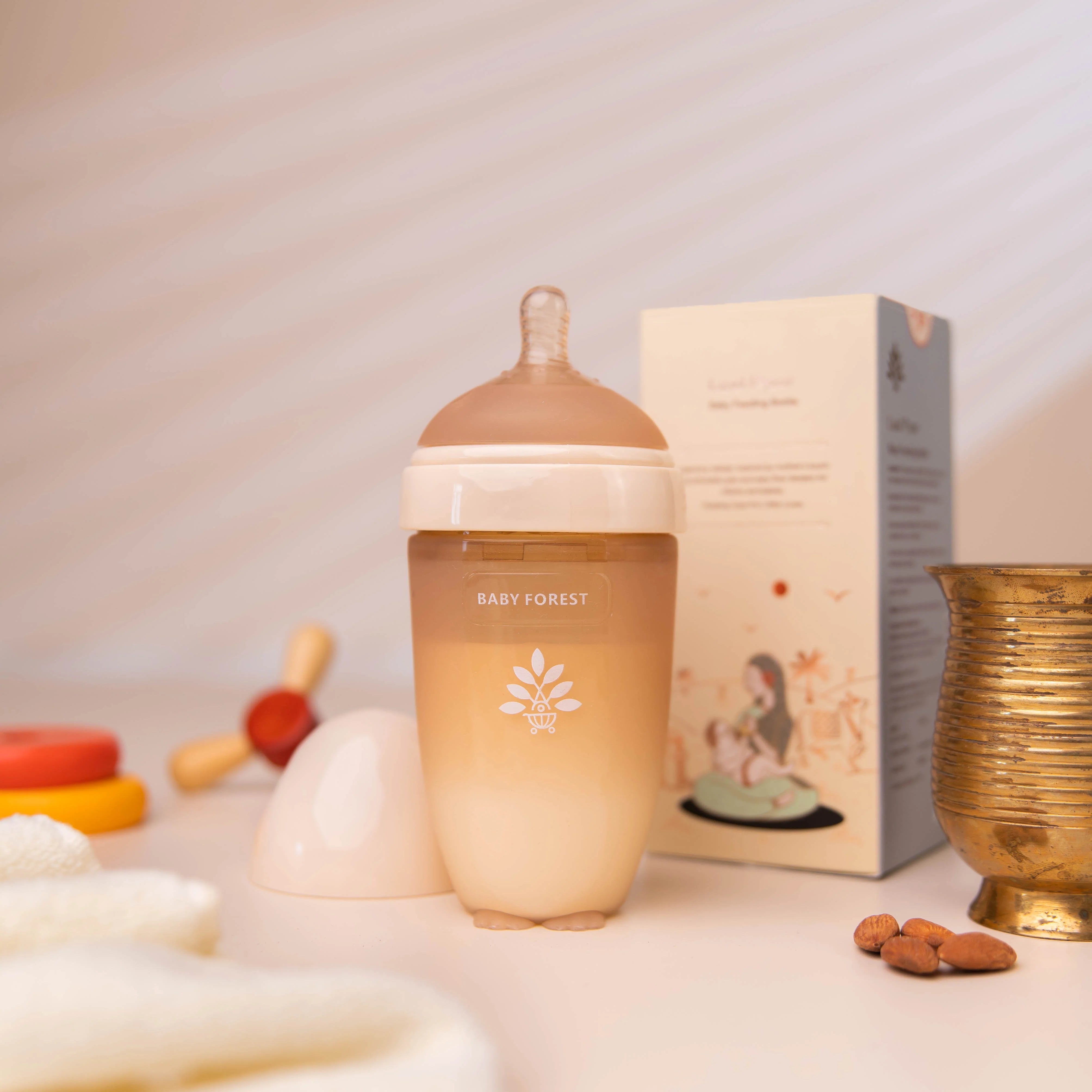
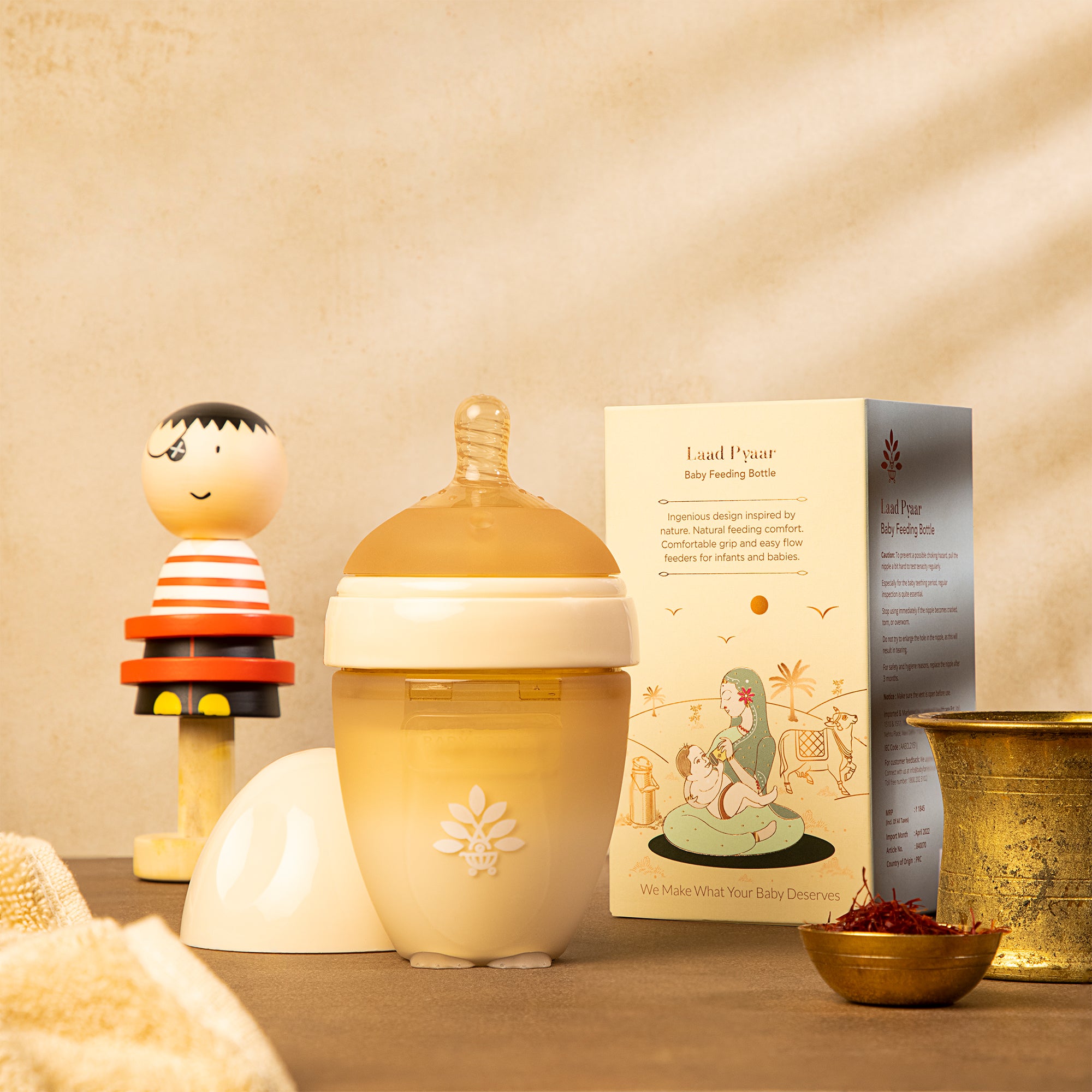
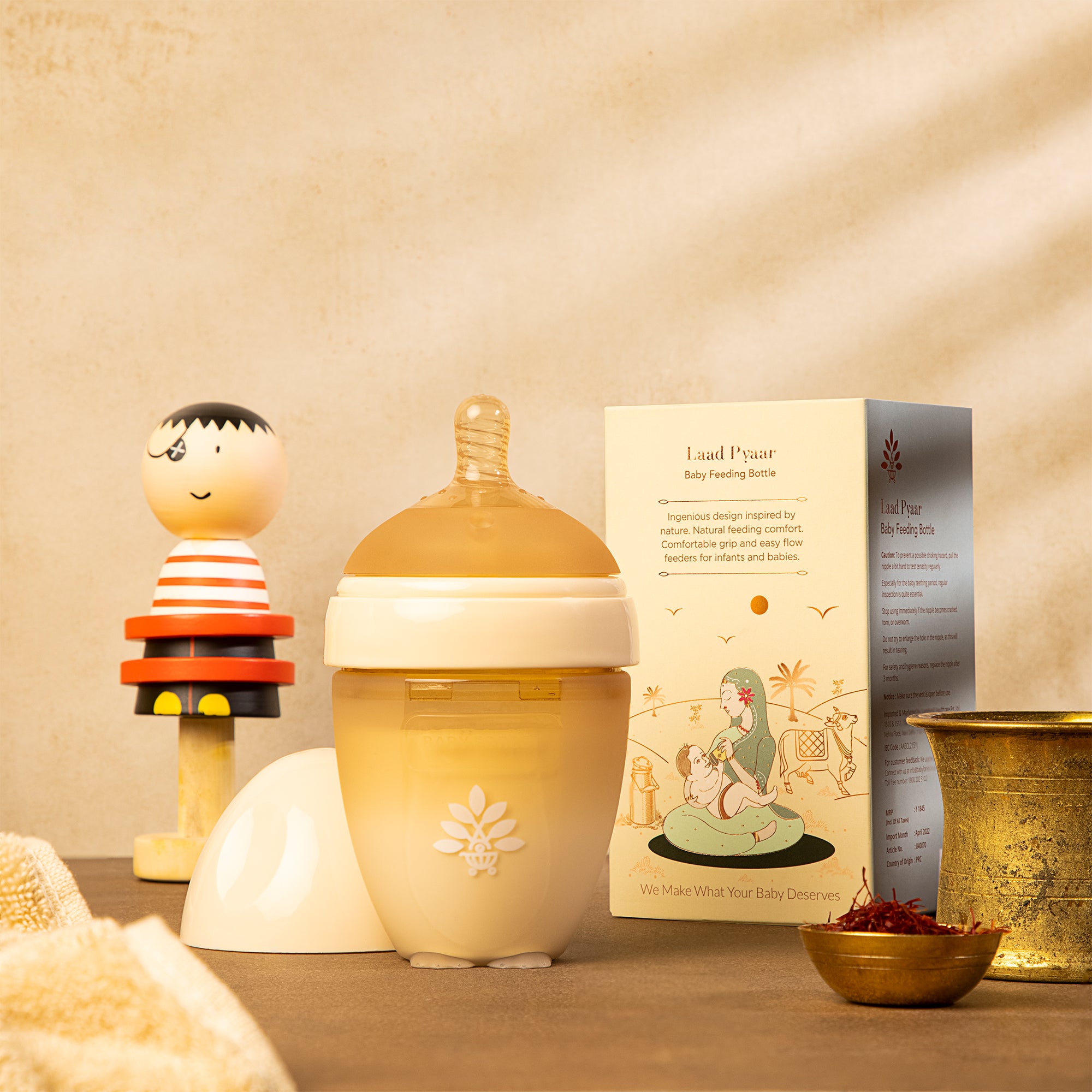
Parents may also consider wide-neck design bottles, such as the Laad Pyaar Baby Feeding Bottle, as they provide easier access during cleaning. Additionally, using a soft bottle brush helps remove buildup thoroughly without scratching or damaging the bottle.
If not cleaned properly, hidden residue can quickly become a source of bacteria. Nipples should always be cleaned separately to ensure no residue remains.
This step makes cleaning baby bottles more thorough and supports better overall hygiene.
Sterilizing baby feeding bottles helps eliminate bacteria that may still remain even after washing.
Common methods include boiling water, steam sterilizers, or microwave sterilization bags.
This step becomes especially important for newborns, as their immune system is still developing and needs extra protection.
While sterilization does not need to be done after every feed, it should be included regularly in the hygiene routine.
It adds an extra layer of safety and improves the overall cleaning process for baby bottles, reducing the risk of infections.
After cleaning, baby bottles should always be placed on a clean drying rack to air dry naturally.
Using cloth towels is not recommended, as they can transfer dust or bacteria back onto the bottle.
Air drying ensures that no new contamination is introduced after washing.
Placing bottles upside down helps water drain completely and prevents moisture from getting trapped inside.
This step is important because trapped moisture can encourage bacterial growth.
Proper drying completes the cleaning of baby bottles and keeps them safe for the next use.


Consistent feeding hygiene is one of the simplest yet most effective ways to protect your baby’s health every day. Regular cleaning of baby bottles helps reduce infection risks, supports digestion, and ensures every feed remains safe and comfortable.
From rinsing and washing to sterilization and proper storage, each step plays an important role in keeping harmful bacteria away from your baby’s feeding routine. These small daily habits create long-term protection and improve overall well-being during early development.
Explore Baby Forest's gentle, safe, and thoughtfully designed baby care solutions and maintain better hygiene and comfort in every feed.
Also Read: Common Baby Feeding Challenges and Solutions